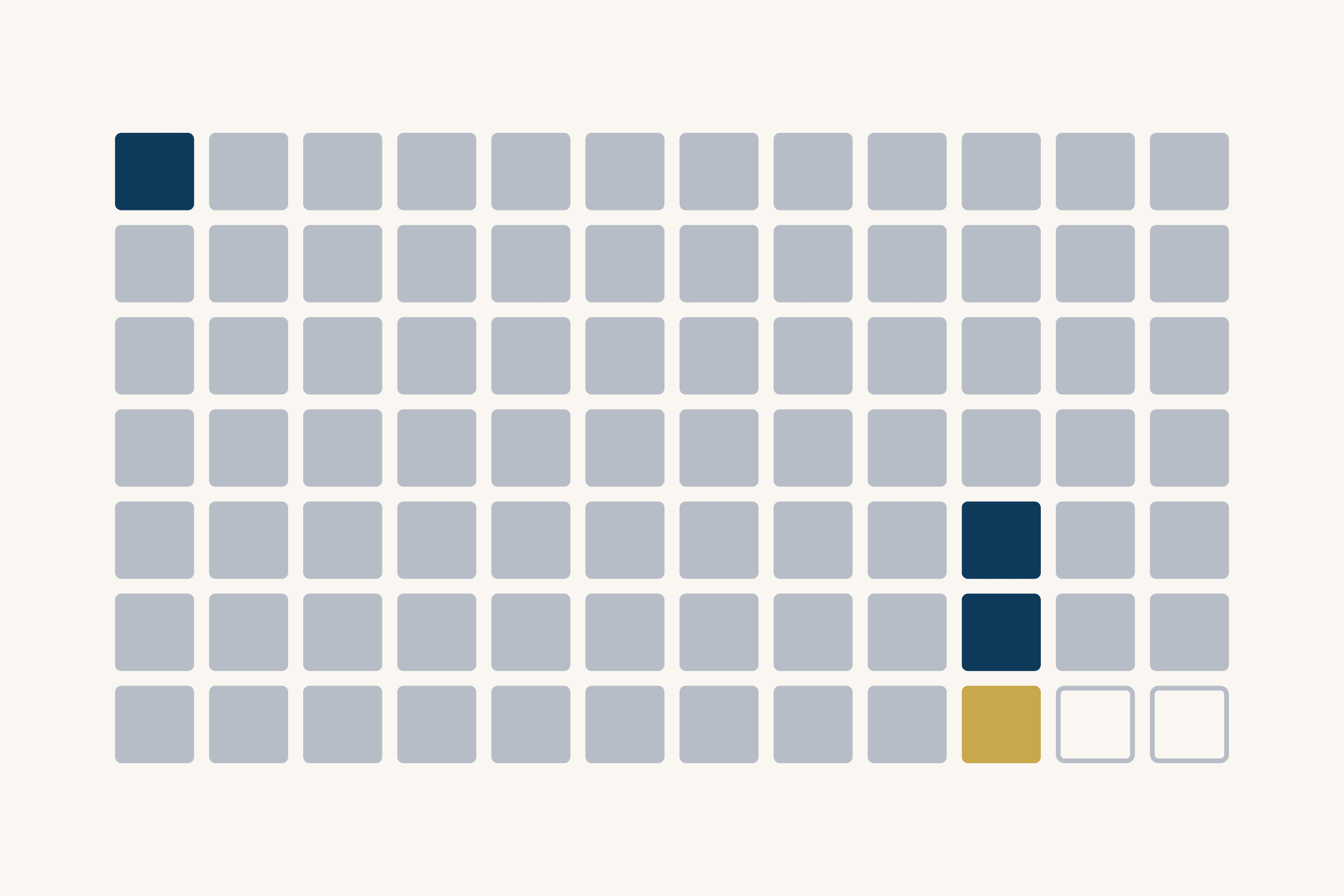
On 16 January 2009 the United States published a final rule adopting ICD-10 (a new set of codes for recording diagnoses and hospital procedures) with a compliance date of 1 October 2013. Twice the date was pushed back, and a rule in August 2014 finally set it at 1 October 2015. From that rule in 2009 to the day the codes took effect, six years and eight months had passed. Then researchers looked at what happened to the numbers.
Why Did the Numbers Move After Six Years of Notice?
In 2020 a study of insurance claims for more than 18 million privately insured people reported level changes of 20% or more in nearly 1 in 6 diagnostic categories at the transition. Two of the three classification systems it tested show that figure, while the third, the WHO disease chapters, changed little. The authors say systems developed on the old codes "may need to be refined" for uses that include "disease surveillance, performance assessment, or risk-adjusted payment."
Nothing in the record suggests anyone behaved badly, which is what makes it a useful case to study. Years of warning came first, the deadline moved twice, and still the groupings that organisations had built on the old codes moved. The authors add that federal payment formulas rely on the prevalence of one set of these categories "to set billions of dollars in payments." I want to be exact about the evidence: the study measures a shift in counts and nothing more, so it cannot tell us about harm or cost, and I put no money figure on it. What it shows is the effect landing in the receiver's numbers after years of notice.
Why Is Notice Never Enough?
A change notice for shared data is a dated message from the owner to every known consumer, saying what will change and when. It can never reach everyone who depends on the data, so the receiver also checks each delivery against its own written record of what it relies on.
Reach comes first. Spreadsheet software was converting gene names to dates and floating-point numbers, and a 2016 scan of leading genomics journals found that approximately one-fifth of papers with supplementary Excel gene lists contained erroneous gene name conversions. HGNC (the body that names human genes) first tried to publicise how to change settings in Excel to prevent the auto-conversion. That fell short. In its own words, "it became clear that we could not possibly reach everybody that uses Excel to list gene symbols." Then, after "several rounds of communication", HGNC changed the symbols themselves, and DEC1 became DELEC1.
Hyrum's Law makes the general point for software interfaces: with enough users, what you promise in the contract stops mattering, because "all observable behaviors of your system will be depended on by somebody." Sculley and colleagues describe "undeclared" consumers of a system's output, which its owner has no record of. Their paper covers machine-learning systems, and I am borrowing the idea. It holds for widely shared data and fails for a feed with one known receiver.
Notice has a second, quieter limit, because the owner's own description can be silent or wrong. Take the 2015 round of the OECD's PISA school survey. A 2025 working paper reports that the questionnaires used in England, Northern Ireland, Wales and the United States changed one word in a truancy question, from "skipped" to "missed." The authors found "no hint of any such alteration" in the international questionnaires or in technical reports of more than 500 pages, and the dataset's labels did not change either. The OECD's own note on the United Kingdom reported truancy up eight percentage points and read it as a sign that "students' engagement with school has deteriorated." This is a working paper about a school survey, so I use it as one case and make no claim about how common the pattern is. Had you checked the data only against the owner's international description, you would have found nothing wrong.
What Does a Data Contract Cover?
A data contract is a written agreement between the party that supplies a dataset and the parties that use it, setting out what the data holds and what notice is given of a change. The work behind it is good, and I claim none of it. Chad Sanderson wrote in 2022 that a contract "requires producers to inform consumers if things change." Notice has a place in the published standards too. The Data Contract Specification has a field for a notice period, "The period of time that must be given by either party to terminate or modify a data usage agreement," and the Open Data Contract Standard lets a contract name an announcements channel.
Receivers have a history here too. Ian Robinson described consumer-driven contracts in 2006, and Breck and colleagues at Google wrote in 2019 that "Data validation is neither a new problem nor unique to ML."
Where a contract stops is reach. Only the parties who agreed to a contract are bound by it, so a standards body, a regulator or a public survey sits outside it, and so does any team that depends on the data without anyone having listed it.
Who Checks Whether the Source Changed?
What I am proposing is a management rule, assembled from the practice above and the two cases, with no new technique in it. Before anyone explains a number that moved as a real change in the world, a named person on the receiving side rules out a change at the source. That person can hold the number back until the source has been checked.
In the PISA case the moved number was in plain view, and it was read as falling engagement with school. Even the organisation running the survey, the paper says, "did not spot this problem." Nobody owned the question of whether the source had changed what it measured.
Each side gets a job. Owners have to write down what the data means, say what will change, to whom and how far ahead, and run old and new side by side for a stated period. A versioned copy is one common mitigation, Sculley and colleagues note, and they name its cost: staleness and the upkeep of several versions. Receivers have to keep their own record of what they rely on each important number to mean, taken from the most specific description available, and to compare each delivery with that record and with the previous one. What the owner says about the data is one input to that record. In the PISA case the most specific description sat in the national questionnaires, which, the paper says, "one must download" from the PISA website.
I would apply the rule to incoming data that feeds a published figure, a decision or a model. To run it you need a written record and someone accountable by name, and you need no tool. Where you can bind the sender, as with a vendor or a partner, put change notice and a parallel run in the contract; my vendor governance scorecard lists change notification among the terms vendors resist. Where you cannot, as with a standards body, a regulator or a public survey, the check on arrival is what having no hold over the sender costs you. One layer out, the same mechanism shows up in The AI That Hurts You Is Not the AI You Own.
A few limits. The ICD-10 study counts shifts and does not measure harm. The PISA account rests on one working paper and its authors' own search for evidence that anyone was told. I have no independent measured share behind my argument that many data quality problems begin outside the team that gets blamed. The team nearest the wrong number takes the blame; I made a related argument about AI projects in Most AI Projects Are Failed by the Organisation, Not the Model.
A Checklist for Shared Data
Each question can be answered in a meeting, and each comes with what you hear when the answer is missing. Data that feeds a model is where this matters most; data readiness for AI starts here.
For the data owner
- Who owns this data, by name, and where is its meaning written down? Missing: you get a team name, a mailbox or "whoever built it", and the meaning lives in someone's head.
- Who uses it, and how do you know? Missing: a guess at one or two departments and no list.
- How is a change announced, to whom, and how far ahead? Missing: announcements happen when someone remembers, or in a channel the receivers do not read.
- Will old and new run side by side, and for how long? Missing: the switch is a date with no overlap.
For the receiver
- What do we rely on this number to mean, and where have we written that down? Missing: the meaning is the owner's documentation plus one analyst's memory.
- Before a moved number is explained, whose job is it, by name, to check whether the source itself changed? Missing: whoever spots the move also explains it, usually as a change in the world.
- Is each delivery compared with our record and with the previous delivery? Missing: the first comparison is made by whoever reads the report.
- Where is the most specific description of this data, and who can hold the number back until the source is checked? Missing: you find the description after the number is published, and nobody has the authority to hold anything.
Pick one number that feeds a decision this quarter. Name the person. Write down what you rely on it to mean. The next time it moves, you will know whom to ask first.
Get The Brief
Original thinking on AI strategy and governance. Every other Tuesday.

Senior AI strategist helping leaders make AI real across four continents. Forbes Technology Council member, IEEE Senior Member.
Ajay's views, from fifteen-plus years in the field. Not legal or compliance advice. See full disclaimers →
Published by AI Exponent LLC