Key Takeaways
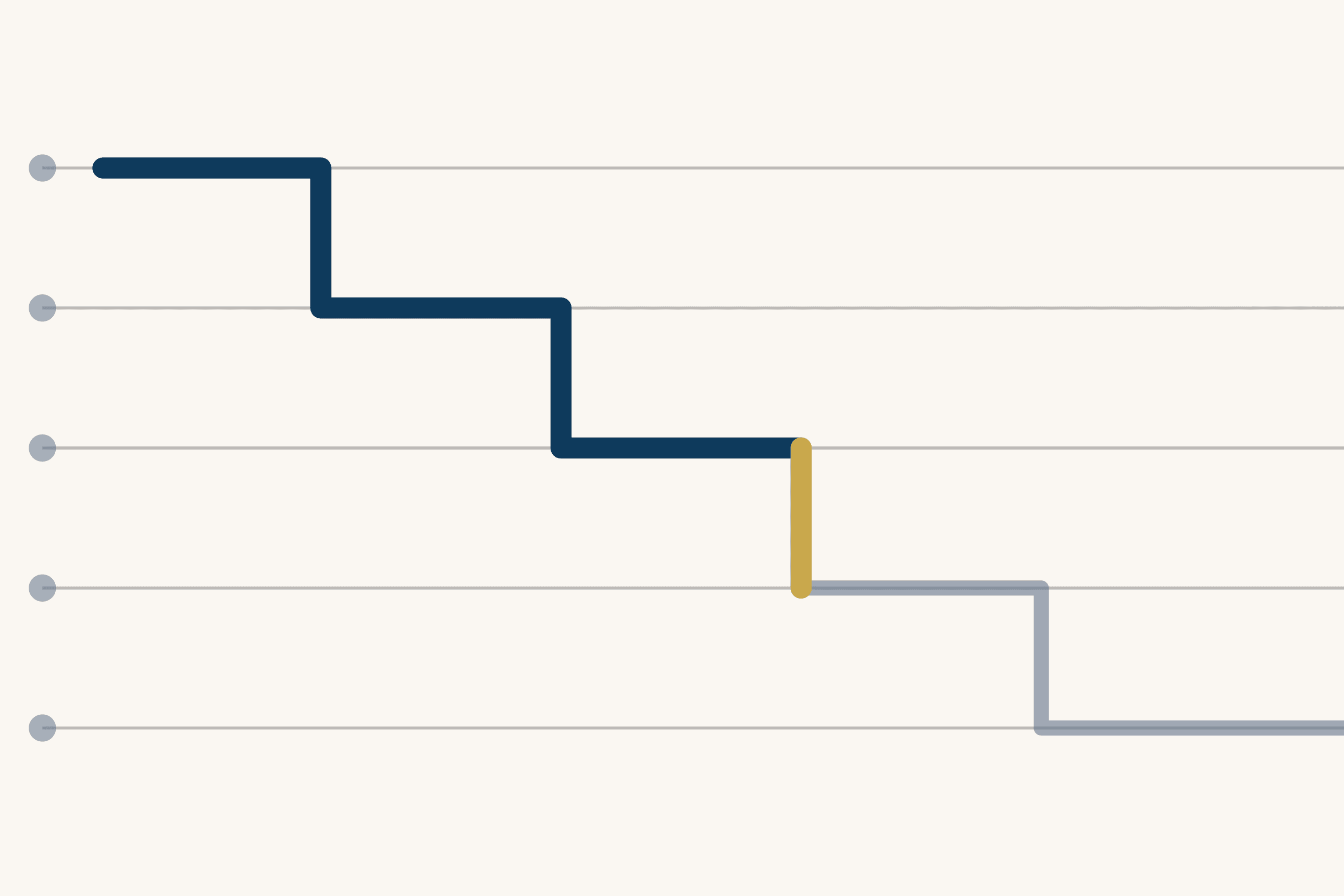
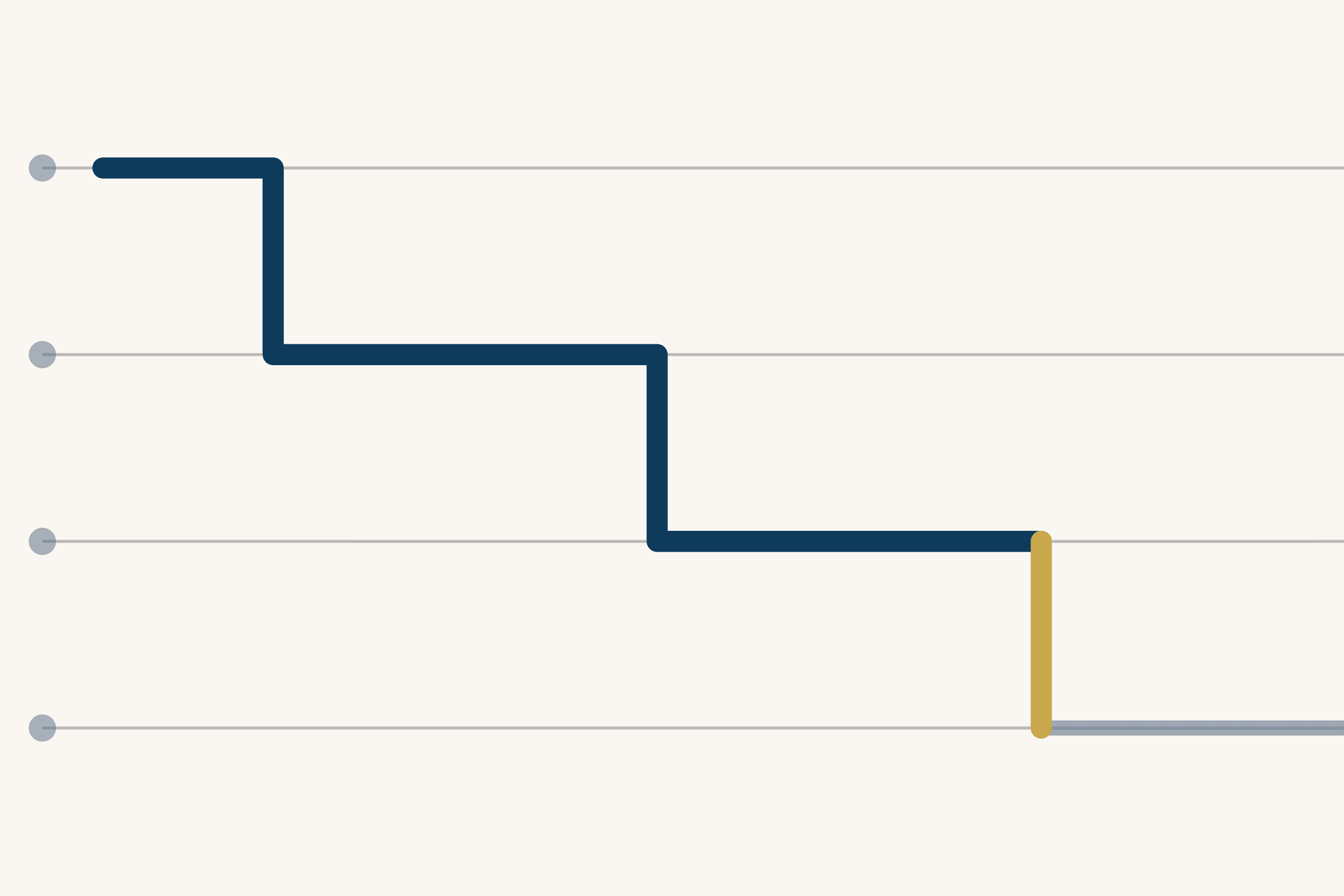
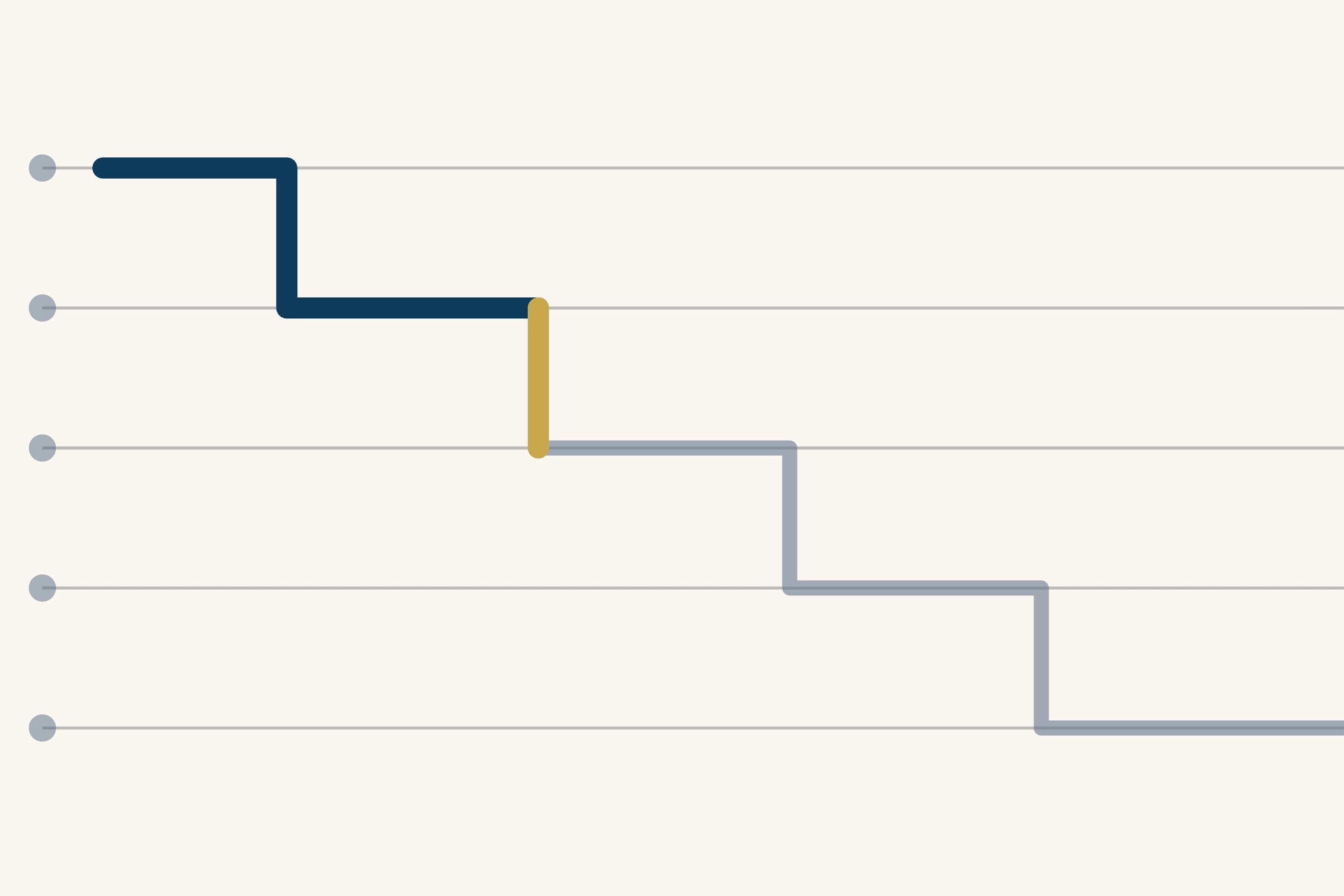
- →L0 to L4 run from systems that take no action at all to self-directed agents; what changes at each step is who approves the action.
- →The step that changes most is L1 to L2: below it a person approves every action, above it the system acts first.
- →In McKinsey’s 2025 survey, 77 percent did not report scaling an agentic system anywhere, so most organizations run no AI agent at scale and sit at L1 or below.
- →A level belongs to the deployment, not the product: the same vendor tool can be a copilot or an agent depending on what you let it do.
- →Before L2, one named system needs written limits, a watcher, an escalation path and a stop that works.
The five levels of AI autonomy, L0 to L4, say who approves what an AI system does. A copilot (L1) drafts and a person approves every action; an agent (L2 and up) acts first, and people supervise it, review its exceptions or audit it afterwards.
Most organizations run no AI agent at scale, which leaves them at L1 or below, and my argument is that this is the right place to be until one named system has the monitoring, the escalation path and the working stop that L2 needs, because switching on a higher level before then means running autonomy nobody can supervise. I wrote this for a director who has to approve an agent budget.
What Are the Five Levels of AI Autonomy?
The levels describe a system as it is deployed, and each step moves one decision, who approves the action, further away from the moment the action happens. Follow one job, refunds at an invented retailer, up the scale.
- L0, traditional AI. Predictive models, recommendation engines and dashboards, none of which act on their own. Here a model scores each refund request for fraud risk, and a clerk reads the score before deciding what to do.
- L1, copilot. The AI suggests, drafts and surfaces insight, and a person approves every action, so the system drafts both the refund decision and the reply to the customer while a clerk approves or rewrites each one before anything goes out.
- L2, supervised agent. The agent acts within defined boundaries while people monitor its decisions and can step in. Refunds below a set limit go out without anyone signing them, larger ones go to a person, and a supervisor who watches the queue can pause the whole flow.
- L3, autonomous agent. The agent runs within programmatic guardrails, and people review the exceptions. Limits, blocked actions and rate caps are enforced in code rather than by someone watching, so refunds and routine disputes flow through while anything that trips a guardrail lands with a person, who also audits a sample each week.
- L4, full autonomy. Self-directed agents with minimal oversight set their own sub-goals toward a goal that people define. This is rare and suited only to narrow, well-bounded uses; for refunds it might mean an agent that rewrites the refund policy when it spots a pattern of abuse, which few retailers would allow.
| Level | What the system does | What people do | A7 readiness needed |
|---|---|---|---|
L0 Traditional AI | Scores, ranks, predicts. Takes no action | Decide and act | Total 7 to 14 |
L1 Copilot | Drafts and suggests | Approve every action | Total 15 to 21. No floor |
L2 Supervised agent | Acts within set limits | Monitor and step in | Total 22 to 28. Every dimension 2 or more |
L3 Autonomous agent | Acts inside guardrails in code | Review the exceptions | Total 29 to 33. Every dimension 3 or more |
L4 Full autonomy | Sets its own sub-goals | Set the goal. Minimal oversight | Total 34 to 35. Every dimension 4 or more |
The line that matters most runs between L1 and L2. Below it a person stands between the system and every consequence, while above it the system acts first and people find out afterwards, quickly at L2 and later at L3.
Why Does "Agent" Mean Three Things in One Meeting?
Ask the CTO, the head of sales and procurement what the company's new agent does and you can get three levels in one answer: engineering may mean code that calls other systems and finishes a workflow by itself (L2 or L3), sales may mean a chatbot with a name (L0 or L1), and procurement may mean whatever the vendor's slide said.
Vendors add to the confusion. Gartner calls the relabeling of AI assistants, RPA and chatbots as agents "agent washing," and estimates that only about 130 of the thousands of agentic AI vendors are real. A product that needs a person to approve every step is a copilot whatever the brochure says, and the test for what makes software an agent in the first place is in the companion piece on how an agent differs from a chatbot.
The harder point is that a level belongs to a deployment rather than to a product, and GitHub Copilot shows why. In the editor its inline suggestions "appear as dimmed text at your cursor position", and the developer accepts them or not, which is L1. Its cloud agent "can research a repository, plan changes, and implement them in the background", handling "branch creation, commit messages, and pushing changes." Whether that counts as L1 or L2 in your company depends on what it may push to and who must approve the merge, which is your setting rather than the vendor's. So give every system its level by what it can do without asking, as you have configured it.
Where Is My Organization, Really?
There are two ways to be "at" a level, and they get mixed up. One is the most autonomous system you run; the other is the most autonomous system your organization can support. Running above the second is what I call Premature Autonomy.
On the first measure the surveys put most organizations at L1 or below. In McKinsey's 2025 State of AI survey of 1,993 participants, 62 percent said their organizations were at least experimenting with AI agents, but only 23 percent were scaling an agentic system anywhere in the enterprise, which leaves 77 percent that did not report scaling one, and in any given business function no more than 10 percent were scaling agents. Deloitte's 2025 emerging technology survey found 38 percent of organizations piloting agentic systems and 11 percent "actively using these systems in production." Both surveys count AI agents; a fraud model that blocks a card by itself also acts without approval and deserves the same questions, though neither survey counts it.
On the second measure there is no survey of readiness scores, so the useful answer is your own. The A7 readiness assessment scores seven dimensions, from data to security, and caps your level at whatever the weakest one can hold. For a signal from outside, Deloitte's State of AI in the Enterprise surveyed 3,235 leaders, and about one in five, 21 percent, reported "a mature model for governance of autonomous agents." That bar sits higher than L2 needs, so it places nobody on the scale, though it does suggest that governance for agents is still being built in most companies.
Is Being at L1 a Failure?
No. A copilot that a team trusts, measures and uses every day is doing real work, and it carries far less risk than a system that acts on its own, provided the person approving actually reads what they approve. A7 sets no floor for L1 for exactly that reason: the person approving each action is the control, so uneven readiness elsewhere does less harm.
The failure is skipping levels. Gartner predicts that over 40 percent of agentic AI projects will be canceled by the end of 2027, "due to escalating costs, unclear business value or inadequate risk controls." That is a forecast, and Gartner doesn't split it by cause, but the third reason is the one a buyer controls before launch.
The strongest objection is that autonomy is learned by deploying it: teams learn to supervise agents by supervising them, and a company that waits for a perfect readiness score will learn nothing. I agree with the first half. The answer is to move one system to L2 on purpose, with a limit small enough that a mistake is cheap, and to learn there. What the objection doesn't justify is switching on L3 in order to learn L2.
What Does Moving From L1 to L2 Take?
At L2 nobody approves the individual action, so four things have to exist before the first one, and I would check them on one named system rather than across the whole company.
- Written limits. What the agent may do, up to what value and on whose data; if nobody can write the limits down, the agent has none.
- A record and a watcher. Every action is logged, and a person or an alert sees a breach as it happens rather than at month end.
- An escalation path. A named person gets the exception within a set time and with the authority to override, because a path that has never been triggered in a test is a guess.
- A stop that works. Someone can pause the agent at once without breaking the service around it.
These sit in A7's governance and human oversight dimensions, and the floor rule brings in the other five, since L2 needs all seven at 2 or above. Minimum Viable Governance covers the governance part, and who answers when an L2 agent gets it wrong is the subject of the piece on agent accountability.
What About L3 and L4?
L3 needs every dimension at 3 or above. In A7's rubric that means, among other things, a complete inventory of agents with documented decision boundaries, an approval gate on critical actions and defenses against prompt injection, so few organizations should plan for it before their first L2 system has run for a while and someone has read its exceptions. Many systems sold as L3 or L4 are groups of agents passing work to each other, covered in the piece on multi-agent governance. When a vendor pitches L4, ask for one customer running it in production (not a pilot) and ask what a person does when it is wrong.
What to Do This Week
List every system your organization calls an agent, including the ones a vendor supplies, and for each write down what it can do without a person approving it and the level that implies. Then score your readiness and compare the two. Where a system sits above the level your readiness supports, lower its autonomy or raise the floor. If everything sits at L1, pick the one system where an L2 mistake would cost least and build the four things above around it.
Sources and Changes
- McKinsey, "The state of AI in 2025: Agents, innovation, and transformation", 5 November 2025.
- Deloitte, "The agentic reality check: Preparing for a silicon-based workforce", Tech Trends 2026, 10 December 2025.
- Deloitte, "State of AI in the Enterprise: The untapped edge", January 2026, pages 20 and 40.
- Gartner, "Gartner Predicts Over 40% of Agentic AI Projects Will Be Canceled by End of 2027", press release, 25 June 2025.
- GitHub Docs, "GitHub Copilot in IDEs" and "GitHub Copilot on GitHub.com".
All sources checked on 6 October 2026.
Changes on 6 October 2026. Cut from about 3,100 words to an explainer under a new headline. The levels now follow the A7 readiness assessment, so at L3 people review the exceptions, and L4 is rare rather than nonexistent. I removed a self-driving car comparison claiming regulators make carmakers move through the levels in order, for which I found no source, along with unsourced figures, companies placed on a level without evidence of how they are supervised, and a governance figure credited to the wrong publisher.
Questions readers ask
What is the difference between L1 and L2 autonomy?
At L1 a person approves every action before it happens. At L2 the agent acts by itself within set limits, and people monitor it and can step in. In the A7 readiness assessment, L2 also needs every readiness dimension at 2 or above; L1 has no floor.
Which autonomy level should my organization run?
The highest level that both your A7 readiness total and your weakest dimension support. Most organizations run no AI agent at scale today, and moving one bounded system to L2 is a sensible next step.
Does L4 autonomy exist?
Rarely. A7 reserves L4 for narrow, well-bounded uses with every readiness dimension at 4 or above. Treat a vendor claim of L4 as a request for a production reference.
Get The Brief
Original thinking on AI strategy and governance. Every other Tuesday.

Senior AI strategist helping leaders make AI real across four continents. Forbes Technology Council member, IEEE Senior Member.
Ajay's views, from 15 years in the field. Not legal or compliance advice. See full disclaimers →
Published by AI Exponent LLC