Key Takeaways
- →Five principles belong before the first outside user: red lines, a record of where your data came from, a fairness check in the release pipeline, explanations and AI disclosure, and a written incident plan.
- →Five more belong before you scale: a way for people to contest a decision, monitoring of live outputs, a reviewer from outside the build team, a map of the rules in each market, and a public page on what you do.
- →Since 2 August 2026 the EU AI Act has required providers to make systems that interact with people tell them they are dealing with AI, unless that is obvious, and to mark generative output in a machine-readable way. Generative systems on the market before that date have until 2 December 2026 to add the marking.
- →Being a start-up lowers the EU fine ceilings (Article 99(6)) and allows simpler documentation for high-risk systems. It does not remove any duty.
Ten principles, in the order a founding team needs them: half before a stranger touches the product, half before you scale past your first market. Each one comes with a habit that fits a weekly release, and none of them needs a compliance team. Some of it is already law: if you place an AI system on the EU market, parts of the EU AI Act have applied since February 2025, and its transparency duties since August 2026.
Updated 4 October 2026. Rebuilt as a short reference. Figures and client stories that had no public source were removed, and every EU date was checked against the Official Journal. The changes are listed at the end.
Why Do Founders Need Their Own Version?
The main frameworks were written for organisations that can staff them. The NIST AI Risk Management Framework sorts the work into four functions: Govern, Map, Measure and Manage. ISO/IEC 42001 is a standard for an AI management system. The OECD AI Principles, adopted in 2019 and updated in May 2024, were the first intergovernmental standard on AI.
A founding team has no risk committee and no quarterly audit cycle. It does have a release every week, and that is where these principles live. I drew them from those three sources and cut each one down to something a team of five can check in the time it takes to ship.
What Are the Ten Principles?
Read the table top to bottom. The order matters more than finishing every row at once.
Ten principles for a team that ships weekly
Rows 1 to 5 go in before the first outside user. Rows 6 to 10 go in before you scale.
| Principle | When | The weekly habit |
|---|---|---|
1. Write down your red lines | Before the first user | Check every new customer request and feature against the one-page list. |
2. Record where your data came from | Before the first user | Log the source, the licence or consent, and the date for any new dataset. |
3. Test for bias in the release pipeline | Before the first user | Run the fairness check with every release and let it block one. |
4. Explain outputs and disclose AI use | Before the first user | Check that new screens say when a person is dealing with AI, and why it answered as it did. |
5. Write the incident plan | Before the first user | Confirm who is on call and who can switch each AI feature off. |
6. Give people a way to contest | Before scale | Read every complaint about an AI output, and reply to each one. |
7. Monitor live outputs | Before scale | Compare predictions with outcomes, and give every alert an owner. |
8. Bring in an outside reviewer | Before scale | Have someone outside the build team review a sample of outputs. |
9. Map the rules in each market | Before scale | Update the list of markets, the AI rules in each, and their dates. |
10. Publish what you do | Before scale | Keep the public page in step with what shipped this week. |
What Goes In Before the First Outside User?
- Write down your red lines. One page: the uses, the users and the decisions your product will not take on, whatever the revenue. Start from the EU list. Since 2 February 2025, Article 5 of the AI Act has banned practices such as social scoring and inferring the emotions of people at work or in education. Reread your page when a large customer asks for an exception.
- Record where your data came from. For every dataset that trains, tunes or grounds a model, note the source, the licence or consent, and the date you last checked it. NIST's Generative AI Profile (July 2024) suggests documenting "the origin and history of training data". When a model misbehaves, that record is where the diagnosis starts.
- Test for bias in the release pipeline. Run a fairness check next to your accuracy tests, on every release, and let it block one. Untested models carry bias by default. In a 2024 University of Washington study, three large language models ranking more than 550 real résumés favoured white-associated names 85% of the time and never favoured Black male-associated names over white male-associated ones.
- Explain outputs and disclose AI use. Show users why the system answered as it did, in terms they can act on. Part of this is now law in the EU. Since 2 August 2026, Article 50 has required providers to build systems that interact with people so that those people are told they are dealing with AI, unless that is obvious. Providers of generative systems must also mark the audio, images, video and text they produce in a machine-readable way. Generative systems already on the market before 2 August 2026 have until 2 December 2026 to add the marking (Article 111(4)).
- Write the incident plan. Before launch, decide who gets called, who can switch the feature off, what you tell customers, and how you record what happened. Keep it to a page, and test the off switch once.
What Goes In Before You Scale?
- Give people a way to contest. A user who thinks an AI output is wrong needs a route to a person who can reverse it. A tribunal has already treated a chatbot's answer as the company's. In Moffatt v. Air Canada (2024), Air Canada suggested, in the tribunal's words, that its website chatbot was "a separate legal entity that is responsible for its own actions". The tribunal called that "a remarkable submission", held that Air Canada was responsible for all the information on its website, and ordered it to pay CA$812.02.
- Monitor live outputs. A model that tested well can drift once the world around it moves. Track errors, drift and the fairness metric on live traffic, with an alert that a named person answers. In November 2021, Zillow reported a write-down of about $304 million on homes it had bought at prices above what it now expected to sell them for, and said it would wind down its home-buying business, Zillow Offers. Its co-founder and chief executive, Rich Barton, said the company had "determined the unpredictability in forecasting home prices far exceeds what we anticipated".
- Bring in an outside reviewer. A team that builds a system shares its blind spots. Ask someone outside it, with a different background or discipline, to review a sample of outputs before each major release.
- Map the rules in each market. Keep a list of where you sell, the AI rules in each place, and their dates. The EU dates are below. For the full EU picture, see the EU AI Act guide.
- Publish what you do. A public page that says what the product does, where it falls short, and how to raise a concern. Enterprise buyers will ask for it, and writing it shows you where your practice is thin.
Which EU Rules Apply to a Start-Up Now?
The AI Act is Regulation (EU) 2024/1689. The Digital Omnibus, Regulation (EU) 2026/1744, amended it with effect from 27 July 2026. It covers a provider that places an AI system on the EU market wherever the provider is based, and a provider or deployer outside the EU when the system's output is used in the EU (Article 2(1)).
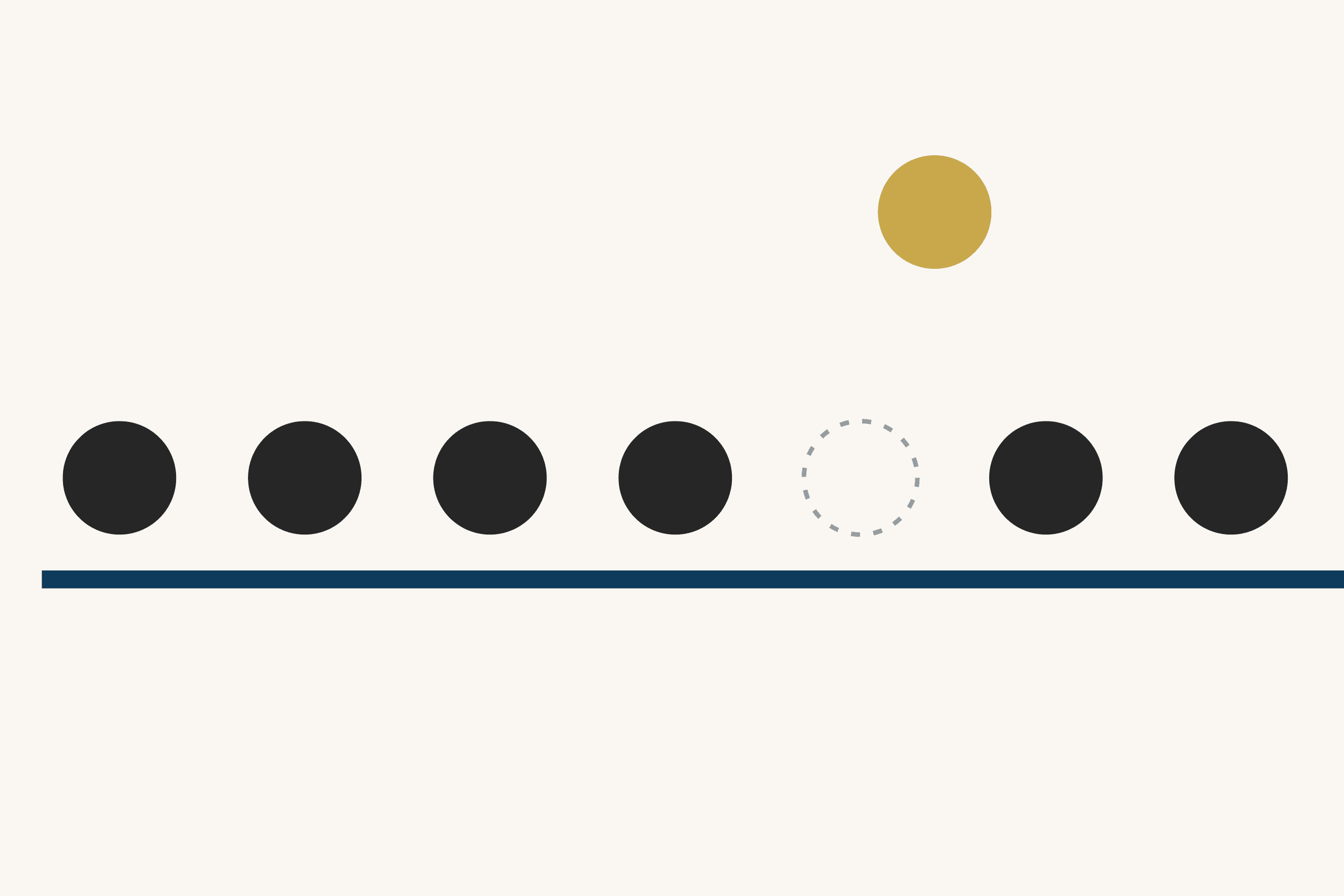
- 2 February 2025: the original banned practices (Article 5) and the AI literacy duty (Article 4).
- 2 August 2026: the transparency duties in Article 50.
- 2 December 2026: the last date for generative systems already on the market before 2 August 2026 to mark their output (Article 111(4)). Two bans added by the Omnibus, on AI-generated intimate imagery of a person without consent and on child sexual abuse material, also apply from this date.
- 2 December 2027: the high-risk rules for the uses listed in Annex III, which include hiring and credit scoring. The Omnibus moved this from 2 August 2026.
Four things founders say, answered from the record
Each answer cites the text it comes from.
| What founders say | What the record says | Source |
|---|---|---|
We are too small for the EU AI Act. | Size lowers the fine ceilings: for SMEs, including start-ups, each fine is capped at the lower of the amount or the percentage. Start-ups may also meet some high-risk documentation and quality-management duties in a simplified form. No duty goes away. | Regulation (EU) 2024/1689, Articles 2(1), 11(1), 63(1) and 99(6), as amended by Regulation (EU) 2026/1744 |
We will add the AI labels after launch. | Every system that interacts with people has owed the disclosure since 2 August 2026, and new generative systems the marking. Generative systems on the market before that date have until 2 December 2026 to add the marking. | Article 50(1) and (2); Article 111(4), added by Regulation (EU) 2026/1744 |
The high-risk rules were delayed, so we can wait. | The high-risk rules moved, to 2 December 2027 for Annex III uses, and older generative systems got until 2 December 2026 to mark their output. The original bans and the AI literacy duty have applied since 2 February 2025. | Article 113, as amended by Regulation (EU) 2026/1744 |
The chatbot said it, not us. | A tribunal rejected that argument. Air Canada was responsible for all the information on its website, whether it came from a static page or a chatbot. | Moffatt v. Air Canada, 2024 BCCRT 149, paragraph 27 |
For your next planning meeting: rate each of the ten rows red, yellow or green. Fix the reds in the first five rows before anything else ships to a new user.
Download: The Responsible AI Playbook for Founders
Get the complete 4-chapter playbook worksheet: principle self-assessment matrix, governance readiness scorecard, design ethics checklist, community engagement planner, 90-day sprint, and risk tier classification. Ready to print or save as PDF.
Enter your email to get instant access. You'll also get The Brief, every other Tuesday.
Free. No spam. Unsubscribe anytime.
This is Part 1 of a four-part series for founders. Part 2 turns the principles into governance you can enforce. Part 3, Responsible AI Is Decided at the Point of Use, finds ethical risks while the product is still being designed. Part 4, The Governance Was Flawless. The Ethics Board Had No Windows, is about governing with the communities a product affects.
To decide which AI use cases to build at all, use the AI Use Case Blueprint. To check whether the organisation is ready to scale, use the AI readiness assessment. For the frameworks behind these principles, see the OECD AI Principles guide and the NIST AI RMF crosswalk.
Sources and Changes
- Regulation (EU) 2024/1689 (the AI Act), Official Journal of 12 July 2024: Articles 2(1), 4, 5(1), 11(1), 50, 63(1), 99(6), 111 and 113, and Annex III points 4 and 5.
- Regulation (EU) 2026/1744 (the Digital Omnibus on AI), Official Journal of 24 July 2026, Article 1, points (7), (10), (26), (39) and (40). Both texts were read in the Publications Office copies of the Official Journal on 4 October 2026.
- NIST, AI Risk Management Framework 1.0, section 5, and NIST AI 600-1, Generative Artificial Intelligence Profile (July 2024), action GV-1.2-001.
- OECD, AI Principles. ISO, ISO/IEC 42001:2023.
- University of Washington News, "AI tools show biases in ranking job applicants' names according to perceived race and gender", 31 October 2024.
- Moffatt v. Air Canada, 2024 BCCRT 149, decided 14 February 2024.
- Zillow Group, third-quarter 2021 results, Form 8-K, Exhibit 99.1, 2 November 2021.
Changes on 4 October 2026. The piece was cut from about 2,100 words to a reference with question headings. The ten principles stay, each shorter, with data provenance moved up to second and explainability to fourth so that the cheapest work comes first. Removed because no public source could be found: the claim of having watched the pattern "forty-seven times", the advisory stories (regulatory action "in three jurisdictions", a Series B that "nearly collapsed", a healthcare start-up that lost a hospital partner, three start-ups said to have avoided a bad pivot because of a red-line document), a cost chart attributed to "50+ AI startups" (2023 to 2025), and a with-versus-without chart and its 34% and 28% figures attributed to "n=47 startups". Six custom charts were removed. Three plotted scores with no source (a principle radar, a cost-and-risk matrix and a stage heatmap), and a stat grid carried a 35% figure that could not be traced and a 78% figure with no citation. An incident card and a stage chevron went with the shorter text. The principles table, the case diagram, the date chart and the objections table above replace them, and every figure in them has a public source. One date was corrected: the old text said the transparency requirement for systems that interact with people "becomes enforceable for high-risk systems on December 2, 2027". Article 50 does not depend on high-risk status and has applied since 2 August 2026. Two other statements were corrected: the NIST guidance on data provenance is the Generative AI Profile of July 2024, not a "2025 update"; and the Zillow loss is now given as the company reported it (a write-down of about $304 million, where the old text said $500 million), without the claim that its competitors survived because of drift detection. Survey figures that the short version no longer needs were dropped.
I am not licensed to practise law in the EU. This is a founder-level reading of the Official Journal texts. Confirm specifics with counsel before you act.
Questions readers ask
Does responsible AI for startups need a dedicated hire?
Not at the start. Give each of the ten principles a named owner among the founders and put the weekly habit in the release checklist. A dedicated role starts to pay when the product makes decisions about people in more than one market, or when an enterprise customer asks for evidence every quarter. Until then, a founder who owns the list and checks it every week does the job.
How is AI governance for founders different from writing a policy?
A policy records intent. Governance is the set of checks that run whether or not anyone remembers the policy: the fairness test that blocks a release, the alert someone has to answer, the switch that turns a feature off. I wrote about that gap in Policy Is Not Control. Part 2 of this series, The AI Governance Playbook, covers how to build the checks.
Is there a responsible AI principles checklist I can print?
The table of ten principles above works as one: rate each row red, yellow or green at your next planning meeting. The worksheet offered above covers the whole four-part series. Its self-assessment uses the series' broader principle names, such as fairness, transparency and accountability, and it adds a governance scorecard, a design checklist and a 90-day plan.
Get The Brief
Original thinking on AI strategy and governance. Every other Tuesday.

Senior AI strategist helping leaders make AI real across four continents. Forbes Technology Council member, IEEE Senior Member.
Ajay's views, from 15 years in the field. Not legal or compliance advice. See full disclaimers →
Published by AI Exponent LLC