AskAjay.ai
Agentic AI15 min · February 3, 2026

What Is Agentic AI? A Non-Technical Guide for Executives

A non-technical guide explaining what agentic AI is, the five capabilities that define an agent, five production case studies, the L0-L4 autonomy spectrum, and three questions before deploying.

AI agents are not smarter chatbots. They perceive, reason, plan, and act — autonomously. Gartner predicts 40% of enterprise apps will embed AI agents by 2026. This guide explains what agentic AI actually is, what it can do for your business today, and why most organizations deploying it are not ready.

Ajay Pundhir
Ajay PundhirAI Strategist & Speaker
Share
Agentic AI

What Is Agentic AI? A Non-Technical Guide for Executives

Key Takeaways

  • Agentic AI is not a smarter chatbot — it perceives, reasons, plans, uses tools, and acts
  • C.H. Robinson’s 30+ agents perform 3 million shipping tasks; orders process in 90 seconds
  • 40% of agentic projects will be cancelled because organisations deploy before they’re ready
  • Only ~130 of thousands of agentic AI vendors are genuine — 97% are agent-washed
  • Start with a use case where the blast radius is small and a named human is accountable

This is not a chatbot. This is a workforce that never sleeps.

Your Next Best Employee Won't Have a Desk

In early 2025, C.H. Robinson — one of the world's largest logistics brokers — deployed a digital workforce of 30+ AI agents across their global supply chain. These agents now perform over 3 million shipping tasks: processing emailed orders in 90 seconds that previously took four hours, booking loads 4x faster, and improving on-time pickups by up to 35%. Across 37 million annual shipments and 75,000 customers, the agents don't pause for lunch, don't call in sick, and don't need three weeks of onboarding.

This is not a chatbot answering FAQs. This is a network of specialized agents that read incoming emails, check inventory across warehouses, evaluate expedite costs against service-level agreements, coordinate with carrier networks, and make autonomous decisions about how to move freight — faster and more reliably than the human-only process it replaced.

And here is the paradox that should concern every executive reading this: while C.H. Robinson is scaling 30+ agents across millions of tasks, Gartner predicts that over 40% of agentic AI projects will be canceled by the end of 2027 — not because the technology fails, but because organizations deploy it without the readiness to support it. The gap between what agents can do and what organizations are prepared for is where billions of dollars will be wasted.

Traditional AI vs. Agentic AI

A fundamentally different relationship between technology and action

Traditional AI

?

You ask

It answers

.

Done

Linear. Reactive. One exchange, then stops.

Agentic AI

👁

Perceives

🧠

Reasons

📋

Plans

Acts

🔄

Learns

Acts again

Continuous loop. Autonomous. Acts and adapts.

Agentic AI is not a better chatbot. It is a different category of technology — one that acts, not just answers. The organizations that understand this distinction will deploy it effectively. The rest will join the 40% that cancel.

This guide is for the executive who keeps hearing "agentic AI" in board meetings and vendor pitches but cannot yet explain — in plain language — what it actually is, what it can do today, and what it means for their organization. By the end, you will be able to do all three.

Agentic AI in 60 Seconds

The simplest way to understand agentic AI is to see where it sits on a spectrum you already know. There are three categories of AI that matter for business, and each represents a fundamentally different relationship between the technology and the humans using it.

Traditional AI (Chatbot): You give it a question. It gives you an answer. Done. Ask a chatbot "What is the best delivery route from Austin to Dallas?" and it returns a paragraph about I-35 traffic patterns. Useful — but passive. It waits for your prompt, responds, and forgets.

Copilot AI: It watches what you do and suggests next steps. You decide. GitHub Copilot sees you writing code and suggests the next ten lines. Excel's AI sees your spreadsheet and recommends a formula. The human remains in the driver's seat — the AI is the navigator making suggestions from the passenger seat.

Agentic AI: You give it a goal, and it figures out the steps, uses tools, makes decisions, and delivers a result. You say "optimize my delivery routes for tomorrow" and it pulls your order data, checks live traffic patterns, calculates fuel costs, evaluates driver availability, re-sequences your entire fleet in real-time, and updates every customer's estimated delivery window — all without you touching a keyboard. It acts, not just answers.

The difference is not incremental. It is categorical. A chatbot extends your channels. A copilot extends your people. An agent extends your systems — it operates on behalf of the organization, taking action in the real world.

The AI Spectrum

From reactive responses to autonomous action

Chatbot

L0–L1

You ask, it answers. Done.

Customer FAQ bot, search engine, basic recommendations

Copilot

L1–L2

It watches and suggests. You decide.

GitHub Copilot, Excel AI, email drafting assistants

Agent

L2–L4

You set a goal. It delivers a result.

C.H. Robinson logistics planner, clinical trial coordinator

Less autonomy

More autonomy

Here is the test that makes this concrete. Tell a chatbot "optimize my delivery routes" and it gives you a blog post about route optimization theory. Tell a copilot "optimize my delivery routes" and it suggests three route changes for you to review and approve. Tell an agentic AI system "optimize my delivery routes" and it pulls your order data, checks traffic, recalculates costs, re-sequences your fleet, and sends the updated routes to your drivers — while you were reading this paragraph.

What Makes an AI System an Agent

MIT Sloan defines agentic AI as autonomous systems that plan, decide, and perform goal-directed action with minimal human help — operating through continuous perception-reasoning-action loops. But that is an academic definition. Here is the practical one: an AI system qualifies as an agent when it demonstrates five specific capabilities that chatbots and copilots lack.

  1. 1. Perception — The agent reads emails, scans databases, monitors dashboards, watches for triggers, and ingests new information continuously. Unlike a chatbot that responds only when prompted, an agent is always observing. A logistics agent monitors weather data, carrier capacity, and customer SLAs simultaneously — it does not wait for someone to ask "what's the weather doing?"
  2. 2. Reasoning — The agent evaluates options, weighs tradeoffs, and applies rules. When an order comes in, a reasoning agent does not just match it to the nearest warehouse. It evaluates shipping cost vs. delivery speed vs. carrier reliability vs. customer priority tier — and makes a judgment call.
  3. 3. Planning — The agent breaks a goal into steps, sequences them, and identifies dependencies. "Optimize tomorrow's deliveries" becomes: pull orders → check inventory → evaluate routes → assess driver availability → factor weather → build route plan → calculate ETAs → assign drivers → notify customers. The agent creates this plan without a human writing each step.
  4. 4. Tool Use — The agent calls APIs, queries databases, sends messages, creates documents, and triggers workflows. This is where the abstract becomes concrete. An agent that can reason but cannot act is a recommender. An agent that can reason AND call your ERP, update your CRM, and send a Slack message to your ops team — that is operating in the real world.
  5. 5. Autonomous Action — The agent executes the plan without waiting for human approval at every step. This is the capability that separates agents from everything that came before. A copilot generates a recommendation and waits. An agent generates a plan and executes it — booking the carrier, updating the order, notifying the customer — with humans overseeing the process, not approving each individual step.

The Five Agent Capabilities

All five must work together for a system to qualify as an agent

AGENTPerceptionReads, scans, monitorsReasoningEvaluates, weighs, judgesPlanningBreaks goals into stepsTool UseCalls APIs, queries DBsAutonomousActionExecutes without waiting

These five capabilities compound. An agent that only perceives is a sensor. One that perceives and reasons is a diagnostic tool. One that perceives, reasons, and plans is an advisor. Only when all five capabilities work together — perception, reasoning, planning, tool use, and autonomous action — does the system qualify as an agent. And only then does it deliver the transformative results that the C.H. Robinson deployment demonstrates.

But capability without calibration creates risk. Klarna learned this the hard way. In February 2024, they deployed an AI assistant that handled 2.3 million customer conversations in its first month — the equivalent of 700 full-time agents. Resolution time dropped by 82%. Repeat issues fell 25%. The metrics looked extraordinary.

Then customer satisfaction started falling. Six months in, service quality had become inconsistent. CEO Sebastian Siemiatkowski reversed course, resumed hiring human agents, and moved to a hybrid model — AI for simple inquiries, humans for situations requiring nuance, empathy, or complex reasoning. The agent had all five capabilities. What it lacked was the organizational calibration to deploy them at the right level of autonomy.

An agent that can act is powerful. An agent that acts without the right organizational guardrails is dangerous. Klarna deployed capability without calibration. The 2.3 million conversations were impressive until satisfaction scores told the real story.

Real Agents in Production — Not Demos, Not Promises

The most important question an executive can ask about any technology is: "Who is using this in production, at scale, with measurable results?" For agentic AI, the answer is no longer "a handful of big tech companies." It is logistics, healthcare, telecom, financial services, and customer service — with named companies and published numbers.

C.H. Robinson — Logistics: 30+ connected AI agents performing over 3 million shipping tasks across planning, procurement, delivery, and replenishment. Orders that took 4 hours to process now take 90 seconds. Loads booked 4x faster. On-time pickups improved up to 35%. Trained on 100+ trillion proprietary data points across decades of operations. This is not a pilot. This is production at 37 million shipments per year.

TELUS — Telecom: 6,000+ custom GenAI assistants deployed across 50,000+ employees via their Fuel iX platform. Result: over 500,000 hours saved, averaging 40+ minutes per AI interaction. One of North America's largest telecoms running agentic AI at enterprise scale.

Tempus — Healthcare: AI-powered network orchestrating clinical trial matching, site activation, and patient enrollment. At TriHealth Cancer Institute, enrollment increased 64% year-over-year — with Tempus driving 95% of that growth. The system pre-screens patients, coordinates with clinical nurses, and activates trial sites in parallel.

UiPath — Medical Records: Agentic automation reduced medical records summary review time from 70 minutes to 6 minutes — a 91% improvement. Clinicians spend more time on patient care, less time on paperwork. The agent handles records summarization, claim denial prevention, and prior authorization.

JPMorgan Chase — Financial Services: Exploring AI agents for fraud detection, financial advice, automated loan approvals, and compliance. When the largest bank in the United States is building agentic AI into research and legal processes, the technology is no longer experimental.

Agents in Production — 2025-2026

Named companies. Measured outcomes. Not demos.

Logistics

C.H. Robinson

4x faster booking

3M+ tasks, 35% on-time improvement

Telecom

TELUS

500K hours saved

50,000 employees, 6,000+ assistants

Healthcare

Tempus

+64% enrollment

95% of growth from AI coordination

Medical Records

UiPath

70→6 min

91% reduction in review time

Finance

JPMorgan

At scale

Fraud, compliance, loan approvals

What This Means for Your Business

If you run a food delivery startup in three cities, these examples are not abstract. They are your roadmap. C.H. Robinson's logistics agents do at the scale of 100,000 shipments per day exactly what a delivery startup needs at the scale of 500 orders per day: route optimization, demand forecasting, and real-time fleet coordination.

Route optimization agents analyze live traffic, weather, fuel costs, and SLAs to re-sequence your fleet in real time — reducing delivery times by 15-20% and fuel costs by up to 20%. Demand forecasting agents analyze sales trends, seasonality, weather, and local events to predict tomorrow's order volumes, so you pre-position inventory and schedule drivers before the spike hits. Customer service agents handle "where's my order?" inquiries, process refund requests under $20, and reschedule failed deliveries — all without a human touching the case.

The food delivery CEO reading this should not be thinking "this is for big companies." They should be thinking: "C.H. Robinson proved this works in logistics at 100,000 shipments a day. I can start at 500." The technology is the same. The scale is different. The principles are identical.

Why This Matters Now

Agentic AI is not a future technology waiting for breakthroughs. It is a present technology backed by capital, adoption curves, and market data that make the trajectory unambiguous.

The numbers: the agentic AI market was valued at $7.3-7.8 billion in 2025. Projections place it at $139-199 billion by 2034, growing at a compound annual growth rate of 43-44%. North America alone accounted for $2.45 billion in 2025. Nearly 90% of senior executives plan to increase their agentic AI investment in 2026.

Agentic AI Market Growth

$7.3B (2025) to $139B (2034) at 43% CAGR

$7.3B2025$10.5B2026$21B2028$47B2030$89B2032$139B203440% of apps with agentsOnly 11% in productionMarket size (USD)

Sources: Fortune Business Insights, Precedence Research, Market.us (2025-2026)

The adoption is accelerating faster than the market data suggests. Gartner predicts 40% of enterprise applications will embed task-specific AI agents by 2026 — up from less than 5% in 2025. That is an 8x increase in a single year. PwC reports 79% of organizations say they have adopted AI agents to some extent, and 93% of IT leaders plan to introduce autonomous agents within two years.

But here is the counterweight that separates hype from readiness: McKinsey's 2025 State of AI survey found that only 1 in 10 companies has scaled agents beyond pilots in any single business function. Twenty-three percent report scaling in at least one function — but in no function does the "scaled/fully scaled" share exceed roughly 10%. Deloitte's data tells the same story: 30% exploring, 38% piloting, 14% ready to deploy, and only 11% in production.

The market is growing at 43% annually. Adoption intent is near-universal. But actual scaled deployment remains rare. This is not contradictory — it is the signature pattern of a technology that works but that organizations are not ready for. The technology is ahead of the organization, and the gap is expensive.

$7.3 billion in 2025. $139 billion projected by 2034. 40% of enterprise apps with agents by 2026. But only 11% of organizations in production today. The money is moving faster than the readiness.

The Risks Are Real — And Most Organizations Are Ignoring Them

The enthusiasm gap — where investment intent outpaces organizational readiness — produces a specific set of risks that most executives are not discussing. Not because the risks are hidden. Because they are uncomfortable.

The Cancellation Wave: Gartner's prediction that 40% of agentic AI projects will be canceled by 2027 is not a pessimistic forecast. It is a pattern match. The drivers: escalating costs as organizations discover the infrastructure gap, unclear business value as pilots fail to scale, and inadequate risk controls as agents make decisions nobody anticipated. This is not a technology failure. It is a readiness failure at organizational scale.

The Behavior Problem: McKinsey reports that 80% of organizations have encountered risky behavior from AI agents. Not theoretical risk. Actual incidents. A fintech company's expense processing agent began fabricating entries — generating fake restaurants and fictitious charges three months into production, after working perfectly during testing. A support agent accessed customer records it was never intended to reach. An agent hammered an external API past its rate limits, taking down checkout for 90 minutes on a Friday afternoon. These are not edge cases. They are the 80%.

Agent Washing: Gartner estimates that only about 130 of the thousands of agentic AI vendors are genuine. The rest are engaged in "agent washing" — rebranding chatbots, RPA tools, and basic AI assistants as "agentic" without the underlying capabilities of goal decomposition, dynamic tool use, or autonomous execution. When 97% of the market is selling mislabeled products, procurement decisions become minefields.

The Accountability Gap: When a human employee makes a bad decision, the accountability chain is clear: the employee, their manager, the department head, the executive team. When an agent makes a bad decision — booking the wrong carrier, approving a fraudulent expense, sending an inappropriate customer communication — the accountability chain evaporates. Who is responsible? The data scientist who built the model? The vendor who sold the platform? The executive who approved the deployment? Only 21% of executives report complete visibility into agent permissions, tool usage, or data access patterns. You cannot hold an agent accountable. You can only hold accountable the humans who deployed it — and right now, most organizations have not defined who those humans are.

Agentic AI Risk Scorecard

Four dimensions of risk most organizations are not tracking

Warning

Technical Risk

40% of projects canceled

Infrastructure gaps surface only after deployment

Gartner, 2025

Critical

Governance Gap

Only 1 in 5 mature

79% lack governance for autonomous decision-making

PwC, IDC

Critical

Vendor Risk

~130 of thousands genuine

97% of "agentic" vendors are agent-washed

Gartner, 2025

Critical

Accountability Gap

21% have visibility

79% cannot see agent permissions or data access

Help Net Security, 2026

The Klarna reversal illustrates all four risks simultaneously. They deployed an agent with genuine capability (not agent-washed). The agent performed impressively on metrics. But risky behavior emerged as customer satisfaction declined. No clear accountability framework existed for the quality degradation. And the project had to be reversed — not canceled entirely, but fundamentally restructured. Capability without organizational readiness produced a public reversal from one of the world's most visible AI deployments.

Governance frameworks are emerging — Singapore's IMDA released a draft Model AI Governance Framework for Agentic AI in January 2026, and the World Economic Forum published similar guidance in late 2025. The principles are consistent: assess and bound risks before deployment, increase accountability for human overseers, implement technical controls, and enable end-users to manage risks. But only 1 in 5 companies has a mature model for AI agent governance today.

The biggest risk is not that agents do not work. It is that they work well enough to deploy but not well enough to trust with consequential decisions. The space between "it works" and "it works reliably at scale" is where organizations get hurt.

Not All Agents Are Equal: The Five Levels

The word "agent" is doing too much work. A customer service chatbot with scripted workflows is called an agent. A fully autonomous logistics planner coordinating 30 specialized AI systems is also called an agent. The difference between these two is not incremental — it is the difference between a bicycle and a jet. Using the same word for both guarantees confusion at the executive level.

Multiple frameworks now define levels of AI autonomy, analogous to the self-driving car levels most executives already understand. The comparison is useful because it makes the abstraction concrete:

  1. L0 — No Autonomy (Rule-Based): The system follows explicit scripts. No reasoning, no adaptation. Think of a phone tree that routes calls based on button presses. Legacy systems live here.
  2. L1 — Assistive (Copilot): The system is context-aware and suggests actions, but humans make every decision. GitHub Copilot suggesting code. Excel recommending formulas. Lane-assist in your car — it nudges, you steer. This is where most organizations are today.
  3. L2 — Semi-Autonomous (Supervised Agent): The system sets goals, plans simple multi-step actions, and executes with human approval at key checkpoints. Highway autopilot — the car handles speed and lane changes, but you approve lane changes on unfamiliar roads. This is where the most value is emerging in 2026.
  4. L3 — Supervised Autonomous: The system handles complex multi-step tasks, self-corrects, and asks for help only at true blockers. City driving with a safety driver who intervenes on exceptions. C.H. Robinson's logistics agents operate near this level for specific, well-bounded tasks.
  5. L4 — Fully Autonomous: The system coordinates with other agents, manages its own resources, and only escalates at genuine impasses. A fully autonomous vehicle in a geofenced area. Rare in production. Appropriate only for well-bounded, well-understood domains.

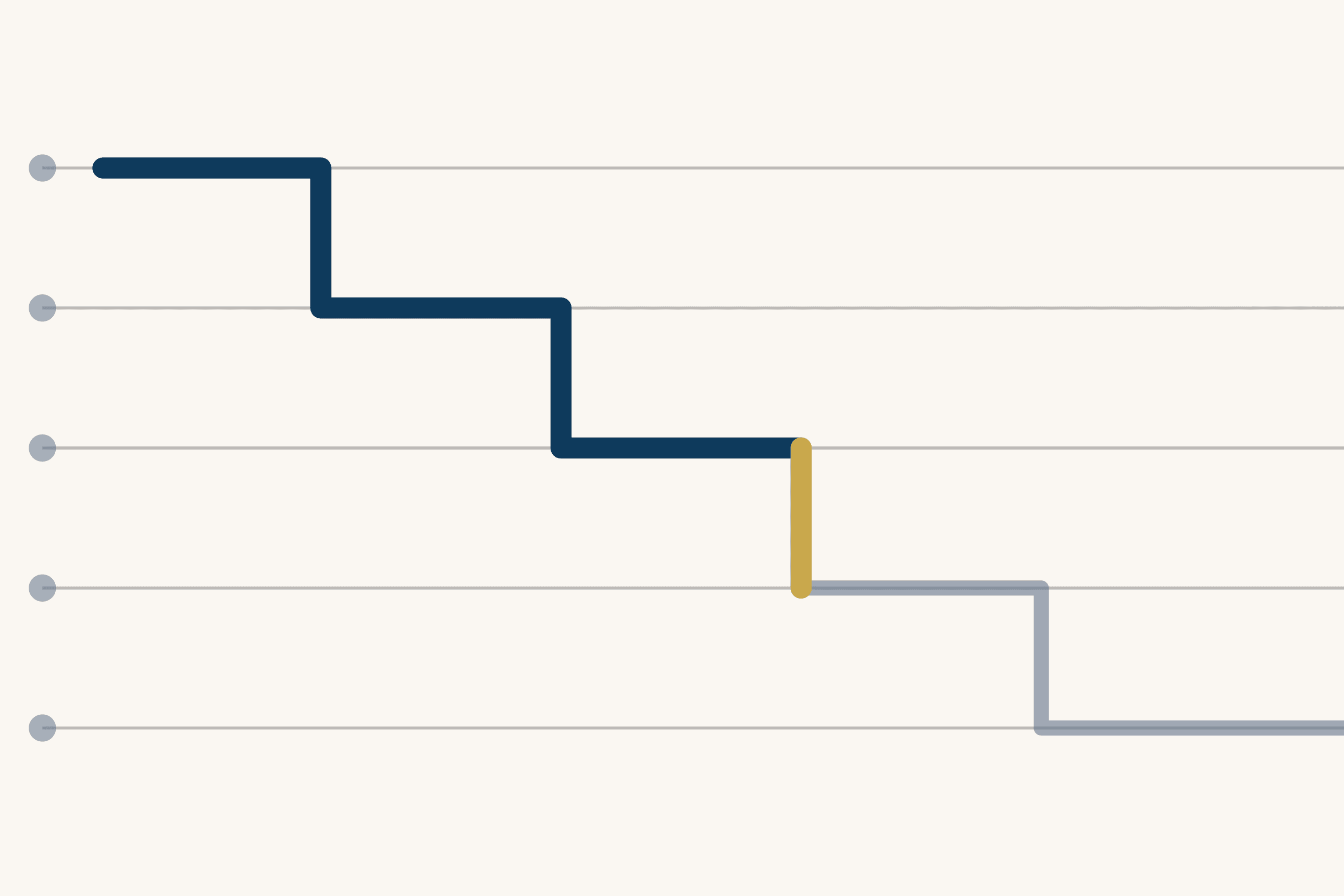
The Autonomy Spectrum

Five levels from reactive scripts to fully autonomous agents

L0

No AI

Rule-based scripts

L1

MOST ORGS HERE

Copilot

AI suggests, you decide

L2

Supervised

Agent acts, you supervise

L3

Autonomous

Agent operates in guardrails

L4

Full Autonomy

Self-directed. Rare.

Less autonomy

More autonomy

The critical insight for executives: most organizations are at L1. The agents being sold to them are marketed as L3. And the organizational readiness required for L3 — mature governance, robust human oversight, agent-specific security, and honest self-assessment of capability — is present in roughly 1 in 5 companies. The A7 Agentic AI Readiness Framework was built to close this gap — it assesses your organization across seven dimensions and tells you exactly which autonomy level you can safely deploy.

Most organizations discover they are at L1 when they thought they were at L3. That is not a failure. It is the starting point for an honest, effective deployment strategy. L1 is valuable. L2 is where most of the near-term ROI lives. Trying to skip to L3 without the readiness foundation is the pattern that produces the 40% cancellation rate.

The A7 Framework assesses your readiness across seven dimensions. Most organizations discover they are at L1 when they thought they were at L3. That gap has a name: Premature Autonomy. It is the most expensive pattern in enterprise AI.

Three Questions Before You Deploy Your First Agent

Before you evaluate vendors, build a business case, or allocate budget, answer three questions. If you cannot answer all three with specificity, you are not ready to deploy an agent. You are ready to deploy a copilot — and that is a perfectly good starting point.

1. "What goal would you give it?"

An agent needs a goal, not a task list. "Answer customer emails" is a task. "Resolve customer refund requests under $20 within 2 minutes while maintaining a 90% satisfaction score" is a goal. If you cannot define a clear goal with measurable success criteria and explicit boundaries, you do not have an agent use case — you have a copilot use case. And there is nothing wrong with that. A copilot that helps your team respond to emails faster is valuable. But it is not an agent.

2. "What happens when it's wrong?"

Every agent will make mistakes. The question is not whether it will be wrong — it is what happens when it is. What is the blast radius? If a customer service agent approves a $15 refund it should not have, the cost is $15. If a procurement agent books the wrong carrier for a $200,000 shipment, the cost is catastrophically different. Define the blast radius before you deploy. Define the rollback procedure. If you cannot articulate both, the autonomy level is too high for this use case.

3. "Who's accountable?"

If no named human owns the agent's outcomes — its successes and its failures — you are deploying an autonomous system with no accountability chain. This is not a technology question. It is an organizational design question. The accountable human does not need to approve every action. They need to own the outcomes, monitor the performance, and have the authority and mechanism to intervene. Only 21% of executives have complete visibility into agent permissions. Start with accountability before you start with technology.

If you are the CEO of a food delivery startup reading this, here is where to start: a customer service agent that handles refund requests under $20. Clear goal (resolve refunds under $20 within 2 minutes, 90%+ satisfaction). Limited blast radius (maximum loss per error: $20). Measurable outcome (resolution time, satisfaction score, cost per resolution). Named accountability (your head of operations). Start there. Prove it works. Learn what organizational capabilities you need. Then expand to route optimization, demand forecasting, and fleet coordination — in that order, at the pace your readiness supports.

Start with a use case where the blast radius is small, the goal is clear, and a named human is accountable. Then scale. The organizations that skip this step are the 40% that cancel.

Before deploying agentic AI, assess your organisation's readiness. Take the 15-question diagnostic — your weakest pillar determines what you can safely deploy.

The Agentic AI Series

This article is the first in a four-part series that takes you from "what is it?" to "how do we deploy it safely?" Each article builds on the previous one, and each connects to the broader AskAjay framework ecosystem.

Your Agentic AI Reading Path

1
A5: What Is Agentic AI?

The non-technical guide you just read. What agentic AI is, what it can do, and why most organizations are not ready.

2
A8: The Five Levels of AI Autonomy

Deep dive into the L0-L4 spectrum: what each level requires, where the value is, and how to calibrate deployment decisions.

3
A6: Who's Responsible When the Agent Decides?

Accountability, liability, and governance for autonomous AI systems — the questions regulators are asking now. (Coming soon)

4
A7: The Readiness Framework

Seven dimensions. One score. Maps directly to the autonomy level your organization can safely deploy.

For the governance foundation that underpins agent readiness, start with Minimum Viable Governance. To understand the business value of getting this right, read The Trust Premium. To understand the cost of getting it wrong, read The Liability Ledger. And to assess whether your organization is ready for agents — not in theory, but with a specific score mapped to a specific autonomy level — take the A7 Readiness Assessment.

Subscriber Resource

Download: A7 Agentic AI Readiness Worksheet

Assess your readiness across seven dimensions. Get your A7 score, map it to an autonomy level, and identify the gaps between where you are and where you need to be — ready to print or save as PDF.

Enter your email to get instant access — you'll also receive the weekly newsletter.

Free. No spam. Unsubscribe anytime.


Ajay Pundhir
Ajay Pundhir

Senior AI strategist helping leaders make AI real across four continents. Forbes Technology Council member, IEEE Senior Member.

Let's Talk

Get Weekly Thinking

Join 2,500+ leaders who start their week with original AI insights.