Key Takeaways
- →In Deloitte’s 2025 survey of 1,854 executives, most said a typical AI use case reaches satisfactory ROI in two to four years. They expect other technology to pay back in seven to 12 months.
- →Only 6 percent reported AI payback in under a year. Even among the most successful projects, just 13 percent saw returns within 12 months.
- →A review on the technology clock sees the cost and misses the asset, so it can read a working project as a failure.
- →Count what the spreadsheet leaves out: intangible returns and the options a project opens, alongside the financial ones.
- →Set the payback date and the leading indicators when you fund, then release money in stages against those indicators.
In the late summer of 2025, Deloitte asked 1,854 senior executives across Europe and the Middle East how long their AI was taking to pay. Most said a typical AI use case reached satisfactory returns in two to four years. They expect other technology investments to pay back in seven to 12 months. Only 6 percent reported AI payback in under a year, and even among the most successful projects just 13 percent saw returns within 12 months (Deloitte, October 2025).
So the review at six or twelve months is usually looking at a project before it can pay. My argument is that this review, run on the clock you use for other technology, reads working AI projects as failures, and that the clock and the count have to be set on the day the project is funded.
An AI payback period is the time from first spend until returns cover the cost. In Deloitte’s 2025 survey, executives put it at two to four years for a typical AI use case, against the seven to 12 months they expect from other technology.
The Clock Is Wrong
Most organisations judge AI on the clock they use for software licences and hardware refreshes, because that is the clock the budget runs on. The evidence says AI returns arrive on a different one.
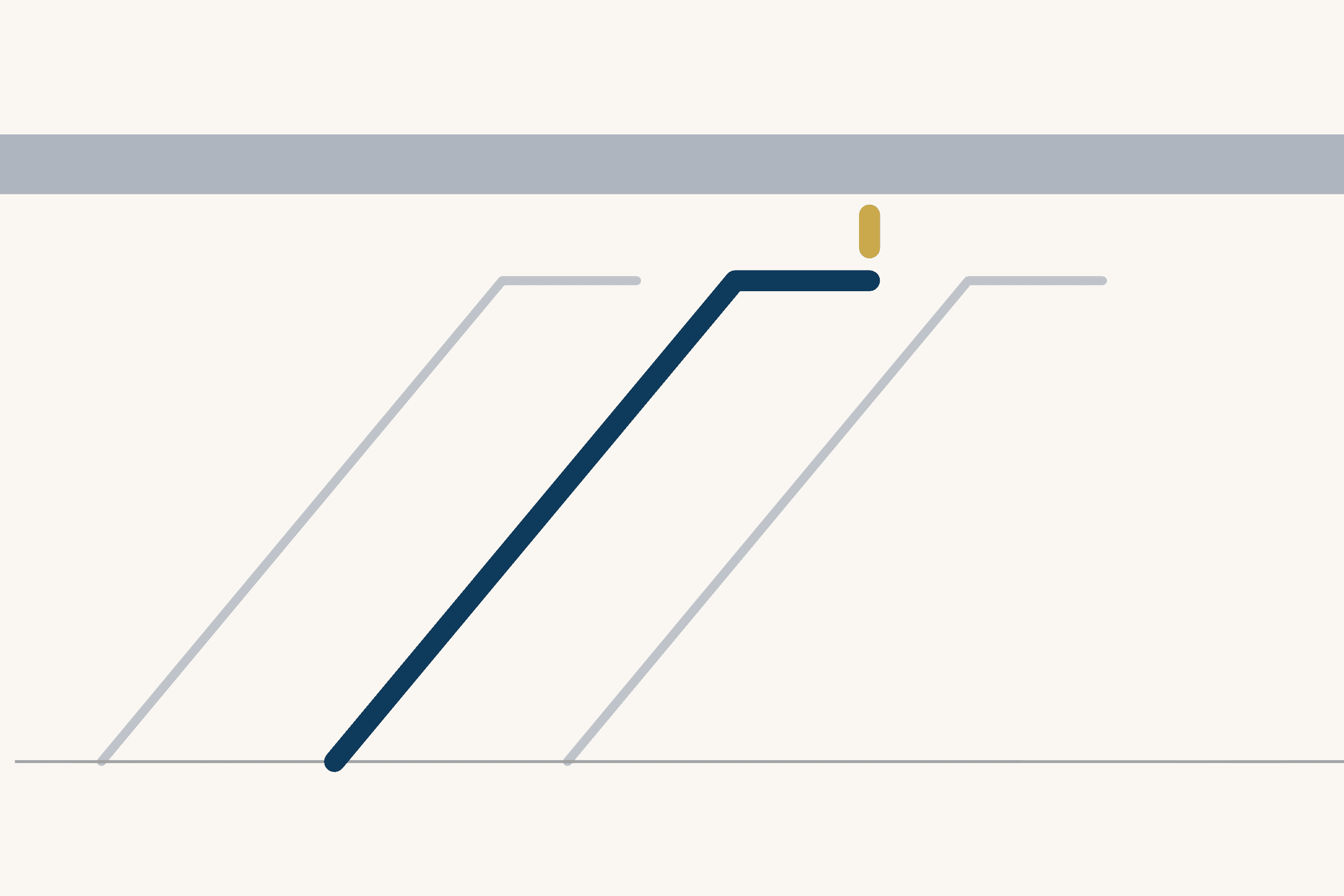
One likely reason for the lag has nothing to do with the models. Erik Brynjolfsson, Daniel Rock and Chad Syverson showed that a general purpose technology such as AI needs large complementary investments in new processes, products and skills. Those investments are mostly intangible and poorly measured, so measured productivity looks too low in the early years and too high later, when the intangibles pay off. They called it the productivity J-curve. Their evidence is economy-wide, not project by project, but I think the same mechanism is what a project review runs into: the money spent redesigning work shows up as cost long before the redesigned work shows up as return.
A review that arrives in the dip sees the spending and very little of the asset. By month six the money has gone on cleaning data, connecting the system to older ones and training the people who will use it. Each of those is a cost on the review’s page, and each is also the foundation the return depends on. A project that is on course and a project that is going nowhere look the same on the financial page.
The clock also differs by kind of AI. In the same survey, 15 percent of respondents using generative AI reported significant ROI from it already, and 38 percent expected it within a year. For agentic AI, only 10 percent saw significant returns now, and most expected them in one to five years. A chatbot that drafts answers for an existing team and an agent that takes over a workflow are not on the same clock, and a portfolio review that applies one deadline to both will be wrong about at least one of them.
The organisations getting the best returns say they treat the clocks differently. Deloitte found that 85 percent of its AI ROI leaders, the top fifth of respondents on its ROI index, use different frameworks or timeframes for generative and agentic AI. One clock does not fit all of it. (For agents doing the work themselves, I price them like a hire, in the Agentic Work-Unit Ledger.)
The Count Is Wrong
The second fault is what the review counts. Traditional ROI, gain minus cost over cost, captures what lands on a profit and loss line within the period. Most of what AI changes early does not.
The missed column is not a licence to claim anything. Each line in it should carry either a number with its method or a sentence saying why it cannot be priced yet, with a named owner. A line with neither should be dropped from the case. That discipline is what separates a fuller count from a padded one.
A 2024 paper in California Management Review by Heather Domin and colleagues gives the missing column a structure. It counts three kinds of return: traditional ROI, such as fines avoided; intangible ROI, such as client trust that brings in leads; and real option ROI, the capabilities that make the next project cheaper. A review that reads only the first will undervalue a project whose returns sit in the other two. Real option value is the easiest to leave out. The data pipeline, the evaluation set and the trained team built for a first use case lower the cost of the second, and that saving never appears in the first project’s numbers.
Bank of America is a useful public example of choosing the count. When it reported on its Erica assistant in April 2024, the figures it led with were about clients: more than 2 billion interactions since the 2018 launch, 42 million clients helped, and more than 98 percent of clients getting the answers they need within 44 seconds on average. Its timeline shows the slow start. Erica took about four years to reach its first billion interactions and about 18 months to reach its second.
What to Settle Before You Fund
The fix belongs at approval, when the people who will judge the project still have no result to defend. Three things go in writing.
- The payback date. The date by which the project should cover its cost. Without your own evidence for a shorter one, Deloitte’s two to four years is the honest default for a typical use case, and the board signs it knowing that.
- The leading indicators. Three or four measures due well before payback: use by the people the system was built for, counted from what they choose to use and not what they are told to log, the time or error rate on the task it changes, the cost to run it, and one measure the customer would notice. Each gets a target and a date, and each is tied to the payback model, so the board can see what hitting it is worth in money.
- The stages. Money released in tranches against those indicators, not against ROI. Hit the indicators while still in the red, and the project earns its next tranche. Miss them, and it stops, whatever its forecast says.
None of this means cancelling the six-month review. It means changing its question. At month six the board should not ask whether the project has paid, because on the evidence it almost never will have. It should ask whether the project is on its indicators: are the intended users using it, has the task got faster or more accurate, is the running cost where the plan said? Yes means the project is on course, even with every financial line in red. No tells you something a payback figure could not, and tells you early enough to act.
The payback date also has to bind in the other direction. A payback date that passes unpaid forces a decision. The sponsor brings the indicators and the spend to date, and the board chooses to stop, to fund a defined next stage with a new date, or to change the project. Without that, a payback date written at approval becomes a date everyone quietly moves, and the long clock turns into no clock at all.
Give the board a range rather than a single number. A forecast of returns between two figures over two years, depending on adoption, tells directors what the result hangs on. A single figure invites them to judge the project by whether it was hit.
Where This Breaks
A long clock can shelter a bad project as easily as a good one. Teams under no pressure to show returns for three years can produce dashboards that look healthy while the system goes unused. That is why the leading indicators must have the power to stop a project. If they cannot stop one, the long clock is a blank cheque.
The opposite mistake is real too. Deloitte’s 6 percent show that some AI does pay inside a year, most likely where the task is narrow and already measured. A project like that should be held to a short clock. Giving it four years because “AI takes time” only shelters it. The payback date is set per project, from its own evidence, and two to four years is the default only when there is none.
Two kinds of work do not fit this shape. Research aimed at a new capability does not follow a J-curve; it pays in a step, or never, and should be funded as a bet, not judged on ROI. And where competitors are moving faster, the cost of waiting belongs in the count. That is real option value working in reverse.
The evidence has limits too. Deloitte’s figures are self-reported, from executives in Europe and the Middle East, at companies that already had AI in daily use, so projects that never paid at all are not in the two-to-four-year figure. The J-curve is measured across whole economies, not inside one company. Neither tells you it’ll pay in year three. Both say a review at month six cannot tell you whether it will.
Before the next AI review, ask one question first: was this project ever expected to pay by now? If the answer is no, the review is measuring the clock, not the project.
Sources and Changes
- Deloitte, "AI ROI: The paradox of rising investment and elusive returns", 22 October 2025 (Jan Michalski, Stacey Winters, Douglas Gunn, Jennifer Holland; 1,854 senior executives in Europe and the Middle East, surveyed 15 August to 5 September 2025, plus 24 interviews).
- Erik Brynjolfsson, Daniel Rock and Chad Syverson, "The Productivity J-Curve: How Intangibles Complement General Purpose Technologies", American Economic Journal: Macroeconomics 13(1), January 2021, pages 333 to 372.
- Heather Domin and colleagues, "On the ROI of AI Ethics and Governance Investments: From Loss Aversion to Value Generation", California Management Review, 29 July 2024.
- Bank of America, "BofA’s Erica Surpasses 2 Billion Interactions, Helping 42 Million Clients Since Launch", 8 April 2024.
All sources checked on 6 October 2026.
Changes on 6 October 2026. New headline, dek, summary and takeaways, cut to an argument about when and what to measure. The opening story about an industrial company, its 14-month payback and its $1.7 million saving was removed: it could not be sourced. So were a retail client’s 22 percent, a claim that I had seen early reviews kill projects three times, and the month buckets and “2 to 3x” in the old J-curve chart. Figures I could not trace to their stated source (Capgemini, a Deloitte customer-service figure, HBR, a hidden-cost range and a measurement budget) are gone. The payback timeline is now drawn from Deloitte’s 2025 survey.
Get The Brief
Original thinking on AI strategy and governance. Every other Tuesday.

Senior AI strategist helping leaders make AI real across four continents. Forbes Technology Council member, IEEE Senior Member.
Ajay's views, from 15 years in the field. Not legal or compliance advice. See full disclaimers →
Published by AI Exponent LLC